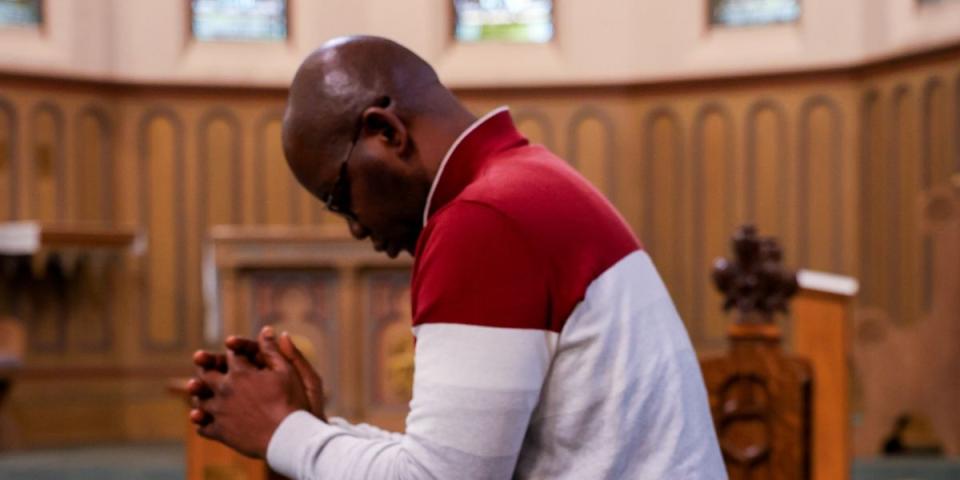
 God’s people are hungry. Hungry for spiritual formation. That conviction was reconfirmed to me this summer as, at Wycliffe College and Regent College, I conducted large classes on The Psalms as Pathways to Spiritual Formation. Students leaned into reflectively praying the psalms, seeking to be rooted and grounded more deeply in their life with God. It was a rich engagement for spiritual formation!
What is spiritual formation? Cindy Lee, in Our Unforming: De-westernizing Spiritual Formation identifies spiritual formation as “the transformation that happens in us as we encounter God again and again and again.”[1] James L. Wakefield, writing on the Ignatian Practices for a Protestant audience, speaks of a “lifelong journey” of growth so that we “live for the greater glory of God.” In a provocative phrase that I’ve long pondered, Wakefield speaks of spiritual formation as growing into “responsive spiritual freedom.”[2] The phrase is a powerful description of spiritual formation that grounds us deeply in our life with God.
Responsiveness speaks of an attitude that is open, attentive, engaged, and. . . responsive! When we open the Bible, the responsiveness of spiritual formation calls us not primarily to ask the historical questions (“What happened back then? What did God say to an ancient people?”), although they are important. Rather, responsiveness acknowledges that in a word from far away and long ago, God speaks now.
Whether reading Leviticus or Paul, Davidic psalms or Revelation, Christ, the Living Word, is—now—speaking. We are therefore issued a personal invitation to listen for God’s word to us. The invitation reminds us to come to the word with humility, setting aside our own agendas so that we listen and respond as God speaks. Over time, this attentive listening roots us more deeply in Christ.
Spiritual formation not only requires a posture of responsiveness before God’s word, but an acknowledgement that formation is spiritual. The church has a vast storehouse of practices for spiritual formation such as lectio divina, Ignatian Exercises, spiritual direction, and so on. These are all valuable, as they can “help us clarify and deepen our commitments to Jesus Christ.”[3] But as tested and valuable as the church’s practices are, they are not what makes spiritual formation spiritual. Spiritual formation recognizes that all our practices are nothing without the work of the Spirit who can arrest, comfort, convict, and direct. It is a mysterious dynamic that works in and through—and sometimes despite!—the practices in which we engage. The mystery of this God-empowered dynamic is repeatedly attested in the collects for Ordinary Time in the Book of Common Prayer. For instance, in several Sundays after Trinity we ask that God would:
- Pour into our hearts such love toward thee, that we, loving thee above all things, may obtain thy promises (6th Sunday after Trinity)
- Graft in our hearts the love of thy Name, increase in us true religion, nourish us with all goodness, and of thy great mercy keep us in the same (7th Sunday after Trinity)
- Put away from us all hurtful things, and give us those things which are profitable for us (8th Sunday after Trinity)
- Grant. . . the spirit to think and do always such things that are right; that we, who cannot do any thing that is good without thee, may by thee be enabled to live according to thy will (9th Sunday after Trinity).
These prayers do not deny our role in spiritual formation; after all, we are called to pray them! But they acknowledge God as the source of what we request: goodness, love of God, true religion, righteous thought and action. This is the stuff of the spiritually-formed life. For this reason, each collect concludes with the petition that our prayers are offered “through Jesus Christ.” It is by Christ’s work and the power of his Spirit that anything spiritual is affected in us; more, it is by God’s mercy that we are kept in the same. Our practices of spiritual formation help us come to God to listen with open responsiveness. But spiritual formation occurs because of God, who is at work to will and to act within us, and who pours into us out of his abundant goodness.
Wakefield’s call to “responsive spiritual freedom” is, finally, a call to freedom. This, too, comes to us through Christ. He has set us free (Gal. 5:1), removing the power of worldly systems and values that enslave us (Col. 2:20). Spiritual formation, as Lee says, is an encounter with Christ again and again and again. We are set free and called to formation into the image of Christ. Ultimately, we anticipate the eschatological freedom and glory of the children of God (Rom. 8:21).
This freedom sounds very lofty (and it is!). But it is worked out in the nitty-gritty of a broken world and our broken lives. Returning again to the image of a tree deeply rooted and grounded, freedom in Christ comes as he removes the rocks and barriers that impede our good growth into lush flourishing and fruitfulness.
In our lives, such work may not be comfortable, and it may even be painful! When I attended seminary, two required courses worked together. The first investigated family dynamics and dysfunctions, unhealthy ways of coping, and the value of confession and mentorship. It was a little daunting, as many of us discovered more clearly our personal brokenness, the unhealthy ways we protected our egos, and the family dynamics that had shaped us away from wholeness. The second course introduced practices of spiritual formation. If we were willing, these became powerful occasions for the “junk” unearthed in the first course to be released, healed, and (where needful) repented of.[4] These two courses gave space and ways by which Christ could remove impediments to freedom.
One of the assignments for my Psalms as Pathways to Spiritual Formation classes this summer asked students to pray the psalms using lectio divina, an ancient practice of slow, meditative reading that waits on the Spirit to speak and reveal. Students then journaled about what they’d heard and how they’d been formed towards responsive spiritual freedom. It was a privilege to read of God’s dynamic work during their quiet openness before God’s word.
The students’ engagement with the psalms was not a one-time “fix” by which they were suddenly spiritually formed into Christ’s image. For all God’s people, formation occurs incrementally—almost secretly—as we engage God’s word regularly and prayerfully, open to the redeeming work of the Spirit. In the word, God speaks; by the word, God forms. It is the word that grounds us as a tree planted by streams of water so that we are nourished and live into the freedom of the children of God.
[1] Cindy Lee, Our Unforming: De-westernizing Spiritual Formation (Minneapolis: Fortress, 2022), 4.
[2] James L. Wakefield, Sacred Listening: Discovering the Spiritual Exercise of Ignatius Loyola (Grand Rapids: Baker, 2006), 21–22.
[3] Wakefield, Sacred Listening, 13.
[4] At times, students were directed to professional counsel, which is not antithetical to spiritual formation.


