Present Your Bodies as a Living Sacrifice
2 Corinthians 2:14 – 15 (NRSV) 14 But thanks be to God, who in Christ always leads us in triumphal procession and through us spreads in every place the fragrance that comes from knowing him.[b] 15 For we are the aroma of Christ to God among those who are being saved and among those who are perishing:”
For years, whenever I heard or read these verses I would experience a negative physical reaction in my body and wonder why this metaphor of the triumphal procession with captives appeared in Scripture (see Psalm 68; Ephesians 4:8; Colossians 2:15).
Paul would have borrowed this metaphor from the Roman world, seeing Jesus as the victorious, conquering general in a triumphal parade.
A Roman parade was given to successful generals as they returned from their conquests. Commentators suggest that to the eyes of the world of that day (and to those who would have heard Paul’s letter read out to them), a Roman triumph was the most glorious spectacle the imagination could conceive.
State officials, trumpeters, and spoils from the conquered land would be in the procession along with captive princes, leaders, and generals in chains who would subsequently be flung into prison, and probably immediately executed. Musicians would follow, along with priests swinging censers filled with sweet-smelling incense, the general himself, and finally the army, fully decorated and shouting their cry of triumph.
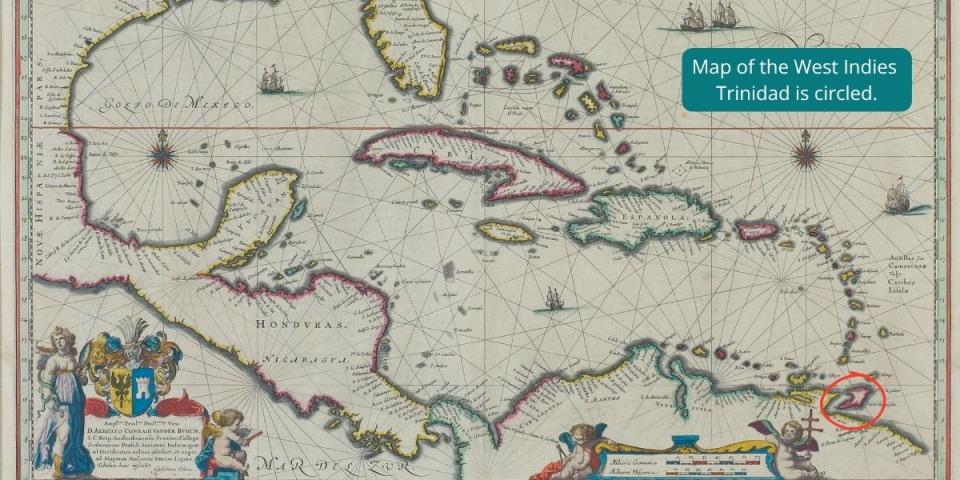
As a teenager in Trinidad, listening to men of colour preach and teach from this text, I wondered why no one who was preaching, teaching, or listening seemed as uncomfortable as I was with this image of captivity.
While I’d chosen not to study West Indian history in high school—I felt knowing this history would be of no value to me—I knew that these verses demanded more from me than a cursory nod from the margins to the triumphant Christ, and my passive theological assent to being considered “captive.”
Only later, in the mid-2020s, did I understand my visceral reaction to the text as the Black Lives Matter movement led me to consider what being a brown West Indian woman meant and to ask: what is the value of a female body of colour?
Through my research I learned that the economic backbone of the British Empire was supported by the bodies of African women, unspeakably tortured, and paraded naked in neck and leg irons to town squares to be auctioned off. I learned that more African bodies (male and female) were deposited on Caribbean islands than on southern US plantations. I also learned that from the mid-1800s, brown women and men from British East India arrived in Trinidad to work as indentured labourers in the sugar cane fields, replacing those African bodies post-abolition.
I finally understood the deep self-consciousness and grief I had felt in my body whenever I had read or heard that 2 Corinthians text. I finally understood why I was so comfortable on the margins and why, at the same time, I thrived in the “mainstream,” predominantly Eurocentric ministries and workplaces I chose to inhabit.
Proximity to power was a powerful antidote to my loneliness, and to my longing to be sincerely welcomed and to truly belong, especially because I excelled at being what those cultures valued: a smart, cultured overachiever.
Turnaround
My reaction to Paul’s words today is very different from those initial reactions. I now own my place in that victorious procession. Why that turnaround?
First, I now recognize that the triumphal Christ leading the procession is the One who was obedient - obedient to the point of death.
In the movie The Passion of the Christ, we see another procession. Accompanied by Roman soldiers, Jewish leaders, and a hostile crowd, Jesus staggers under the weight of the cross as he stumbles and crawls toward the hill on which he’ll die. Mary rushes to him. He looks at her and says, “See. I am making all things new.” It’s a powerful moment in the movie.
“I am making all things new.” At the moment of Jesus’ death – as He breathed His last, rocks split, the earth shook, graves of righteous people opened, and the Temple curtain was torn from the top down (Matthew 27:51-53). Jesus’ death physically and theologically rearranged the order of the world, dismantling previous understandings of worship, and ushering in something new: a new convenant marked by access for all bodies, at all times, to God - Father, Son, and Spirit. Proximity to power would now be available to anyone who came in humility, and worshipped in Spirit and in truth (John 4:23-26).
Second, the love that kept Jesus, bruised and broken, naked, nailed to a Cross...means that our very bodies have been redeemed, and not just our individual bodies, profound as that is, but the collective body—the church.
As Paul writes in 1 Corinthians 12: "22 On the contrary, the members of the body that seem to be weaker are indispensable, 23 and those members of the body that we think less honorable we clothe with greater honor, and our less respectable members are treated with greater respect….”
The bodies of my African and Indian forefathers and foremothers were of immense value to God, as is my body today.
Third, Jesus’ death and resurrection invite me to move my body from the margins, to not simply watch that triumphal procession, but to join it without shame and without self-consciousness.
Joining the procession
In doing so, I acknowledge the price paid by God the Father for the restoration of all bodies – the sacrifice of His Son Jesus Christ. In joining that procession, I give thanks.
To the followers in Rome, Paul writes: "I appeal to you therefore, brothers and sisters, on the basis of God’s mercy, to present your bodies as a living sacrifice, holy and acceptable to God, which is your reasonable act of worship." Romans12:1 (NRSV)
Not only do we have access to the Holy of Holies. Not only are our bodies redeemed. We are now invited to bring those very bodies and present them to God thereby spreading the fragrance of the knowledge of Christ wherever we go.
For when we do so, we allow ourselves to be made new by the transforming of our minds. We can now taste and see how good, pleasing, and perfect God’s will is. We experience peace knowing our bodies are seen, anointed, held. They are safe.
The sacrifice offered in the new convenant in which we all live, is the communal embodied life of the Christian community. Our many bodies (Jew and Gentile in Paul’s context) become a singular sacrifice of praise and thanksgiving and of one mind.
May all of us, regardless of the colour of our bodies, say yes to that invitation to join the procession of the redeemed, spreading everywhere that sweet fragrance of the risen Christ. Thanks be to God.
Renee James is the Communications Associate at Wycliffe College.


