Vestigia Dei
Wycliffe College Blog

Vestigia Dei  – is a Latin term meaning “traces of God.” As a theological term it is associated with natural theology – that is, the view that there are vestiges of God within creation. We’ve chosen this term as the title of the Wycliffe College blog because our hope is that through these writings, readers might glimpse evidences for God as our writers interact with the wider world.
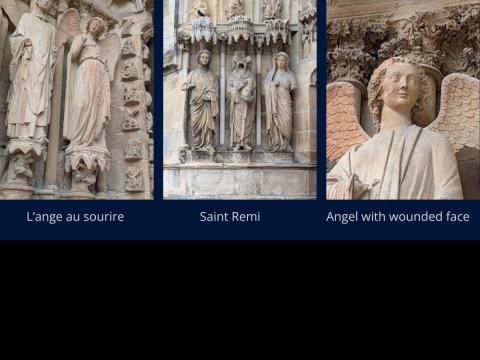
The smiling angel: rooted in hope

Catherine Sider Hamilton
The Rev. Dr Catherine Sider-Hamilton, Professor of New Testament at Wycliffe College, on bullet holes, cathedral walls, war wounds, smiling angels and hope. Read more

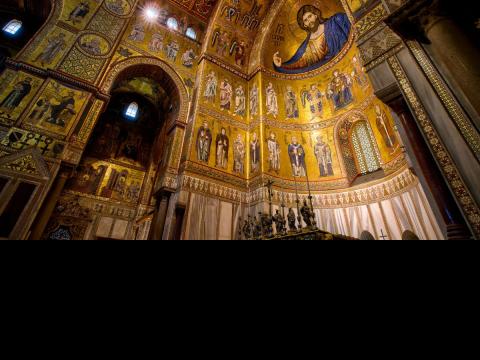
Christus Pantokrator: Good News in a World Gone Awry

Lissa M. Wray Beal
Professor Lissa Wray Beal explores love, power, and justice through the lens of the Kingship Psalms, and the dimensions of a souvenir bought on a cathedral's steps in Europe.

Transitions Into Darkness

Lissa M. Wray Beal
Sometimes transitions lead us into dark territory. Dipping into the book of Jeremiah, Professor Lissa Wray Beal offers insight into how we may all find comfort and hope, even in those transitions.

Walking the Second Half of Life

Lissa M. Wray Beal
Professor of Old Testament, Lissa Wray Beal, analyses how vocation, beauty and trust can fuel the vigour for our Christian journey, and how turning to the examples of leaders in the faith, we can find role models to help lead the way.

The Good Thing: Thoughts on the Confession of St. Peter

Catherine Sider Hamilton

Let me begin with the story of two Rhodes Scholars. One is named William Jefferson Clinton. He went to Georgetown University on scholarship, Oxford on the Rhodes Scholarship, and Yale Law School. He served as the 40th and 42nd Governor of Arkansas and before that was Arkansas’ Attorney General.

Journeying as Pilgrims

Lissa M. Wray Beal

“Guide me, O thou great Jehovah, pilgrim through this barren land.” So begins William Williams’ hymn in which Christian life is a pilgrimage along which the believer’s weakness is exposed, and God’s provision abounds. Pilgrimage is a deeply embedded description of the Christian life.

The Temptation of the Godless Sermon

Judy Paulsen

Some time ago I visited a church in which the sermon, delivered by a guest preacher, concluded with the sentence “If you do this you’ll be happy, and your neighbour will be happy.”

Kyrie, Matthew, and Anti-Judaism, or Why Read the Gospel in Greek

Catherine Sider Hamilton

I don’t often think about Kyrie – and, in fact, when I saw the name, just like that, “Kyrie,” in my newsfeed last week I thought I was seeing the Greek word kyrie, meaning “Lord,” as in kyrie eleison, “Lord, have mercy.” That was an exciting moment: New Testament Greek breaking

Scripture Readings for a Church in Trouble

Judy Paulsen

Over the past few weeks I have had several long conversations with pastors who seem dangerously close to burn-out. They’re worried because some 25 to 30 percent of their congregations haven’t returned to church following the easing of pandemic restrictions.

Body Talk: Is there a Christian Way to Think About Our Bodies?

Judy Paulsen

The first time I encountered the term eating disorder I was about twelve and read a letter addressed to Dear Abby, a syndicated advice column published in many North American newspapers.